Confluence as a knowledge base can work for AI projects if you treat it like a controlled documentation system, not a dumping ground for chat transcripts. It’s strong at publishing stable process, policies, and agreed decisions. It breaks when teams expect it to behave like an LLM-ready memory: verified facts, scoped context, and citations that survive fast iteration. This guide shows exactly where the edge is, how to structure pages to reduce drift, and when you need a committed ledger per project.
- Turn Confluence from page sprawl into a usable knowledge base by separating source documents, decisions, and current state into different page types with strict update rules.
- For LLM workflows, build an explicit citation and confidence system (Established vs Hypothesis vs Exploring) so ChatGPT/Claude stops recycling unverified notes as “facts.”
- Move from wiki pages to a project ledger when your team needs persistent, thread-safe context that survives context-window limits and prevents drift across sessions.
When does Confluence work well as an internal knowledge base?

Confluence as a knowledge base works well when the knowledge is meant to be read by humans, changes at a moderate pace, and has a clear owner. In practice, that means operational runbooks, onboarding guides, product specs that have passed review, and “how we do X” process pages.
Confluence’s strengths are structural: permissions, page hierarchies, version history, and editorial workflows. If you already run a clean review process (draft - review - publish), Confluence can be your internal “single source of truth” for what the organization has agreed is true right now.
Where teams get real value is when they stop writing “everything” and start publishing only what they are willing to stand behind. That’s the difference between a wiki and a knowledge base definition that’s actually useful: a knowledge base is curated, owned, and maintained, not just stored.
A practical test I use with ops leads: if a page has no clear “next review date” or “owner,” it’s not knowledge, it’s a liability.
What a “good” Confluence KB page looks like (and why templates matter)
Template discipline is not bureaucracy. It’s how you prevent drift.
A solid template for knowledge base article in Confluence includes: purpose, scope, last verified date, sources, and “what changed since last version.” If you do nothing else, add “Last verified” and “Owner” to every page header. That single line changes behavior.
Confluence is also great at cross-linking. But cross-linking only helps if you link to primary sources, not opinions. When you can, link out to the authoritative source (policy doc, contract clause, dataset, or system output) and treat the Confluence page as the interpreted summary.
Where does Confluence break for LLM workflows and fast-changing context?
Where Confluence breaks is exactly where LLM usage is highest: fast iteration, multi-session work, and ambiguous inputs. Teams start pasting ChatGPT/Claude outputs into pages, then months later someone prompts an LLM with that page and gets confident nonsense back.
Three failure modes show up repeatedly.
First: stale pages masquerade as current truth. Confluence is good at versioning, but humans rarely open the history. A page from six months ago can look “official” because it’s neatly formatted.
Second: unverified notes become “facts.” LLMs do not respect your intent. If a page contains a speculative paragraph, the model might treat it as ground truth unless you label it clearly and consistently.
Third: context windows punish long, messy pages. The practical constraint is the chatgpt context window and similar limits in Claude. If you stuff a giant Confluence page into a prompt, you either exceed the window or you force the model to compress aggressively. Compression is where nuance dies. If you want a clean explanation of why this happens and how to design around it, start with ChatGPT context window limits and how to stop losing project context.
This is also where “LLM knowledge base” expectations diverge from wiki expectations. A wiki optimizes for browsing and narrative. An llm knowledge base optimizes for retrieval, grounding, and traceability. People sometimes call this a rag knowledge base because retrieval augmented generation uses embeddings to fetch relevant chunks before generation. But RAG does not magically fix stale or wrong content. It retrieves confidently. It does not verify.
If you want the deeper taxonomy (RAG vs “verified ledger” approaches), knowledge base patterns in AI from RAG to verified ledgers is the cleanest starting point.
“claude knowledge base feature is not enabled” is not the real problem
You’ll see teams stuck on tooling details like “claude knowledge base feature is not enabled,” or they’ll chase a plugin that promises “ask Confluence anything.” The hard part is not enabling a feature. The hard part is ensuring the underlying content is trustworthy, chunkable, and scoped.
If your Confluence space contains mixed confidence content (policies + brainstorms + half-finished research), any retrieval layer will pull the wrong thing at the wrong time. That’s a content governance problem, not a model problem.
How do you structure pages, sources, and decision logs to reduce drift?

The fix is structural. Stop treating Confluence as a single bucket. Split it into page types with different rules, then make the rules enforceable.
Here’s a structure that holds up under real AI-assisted work without turning Confluence into a maze:
| Page type | What goes on it | What never goes on it | Update rule |
|---|---|---|---|
| Source Library | PDFs, meeting notes, raw exports, links to systems of record | Summaries presented as truth | Append-only. Never rewrite history. |
| Current State Brief | The “what we believe now” snapshot for the project | Raw chat logs, unscoped ideas | Must cite sources and decisions. Review weekly. |
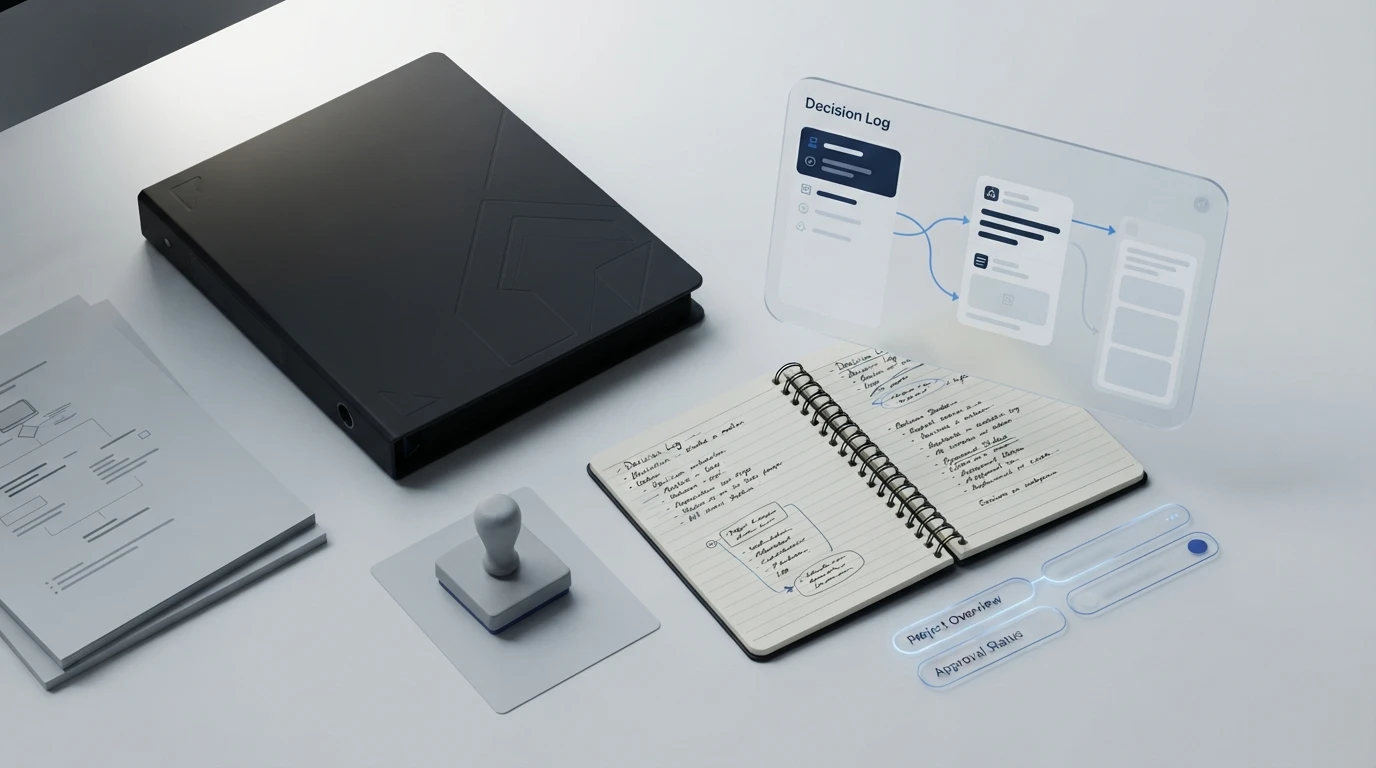
| Decision Log | Decisions, options considered, rationale, owner | Unowned “recommendations” | Only updated when a decision is made or reversed. |
| Hypotheses & Experiments | What you’re testing, assumptions, next steps | Final claims | Must include success criteria and status. |
This is how you reduce drift: you make it hard for speculation to look like policy, and you make it easy for an LLM (or a human) to find the current snapshot without reading 40 pages.
If you want the “single source of truth,” it should be the Current State Brief, not the entire Confluence space.
Add citations that survive copy-paste into prompts
Citations are the difference between “LLM-assisted” and “LLM-fueled hallucinations.”
At minimum, every claim in the Current State Brief should have a source pointer: a link to the Source Library item, a dataset ID, a contract clause, or a meeting timestamp. If you want a formal definition of how citations operate in knowledge systems, the Wikipedia overview of citation is a decent baseline, but your operational standard needs to be stricter than academia: it must be fast enough to use daily.
A trick that works: add a short “Evidence” line under each key statement, not a bibliography at the bottom. LLMs tend to preserve nearby context when summarizing, so local evidence travels better than footnotes.
Permissions and search: design for retrieval, not browsing
Confluence permissions are both a feature and a trap. If your AI workflow depends on content that half the team cannot access, you’ll get partial retrieval and silent gaps. That leads to “confident but incomplete” outputs.
Also, Confluence search is not a research tool. It’s a document finder. If you need systematic research synthesis, you’ll end up exporting, tagging, and re-structuring anyway. That’s why teams often pair Confluence with a dedicated research workflow or an ai research assistant. If you’re comparing tools and workflows, how AI research assistants like Elicit fit into modern research stacks lays out the tradeoffs clearly.
When should you move from wiki pages to a committed ledger per project?
Move when your project requires persistent, verified context across many threads and sessions, and when “what we know” changes faster than your wiki can be maintained. In other words: when Confluence becomes the archive, not the operating memory.
A committed ledger per project is different from a wiki in one key way: it separates facts, hypotheses, and reasoning and forces you to commit them intentionally. That’s the missing mechanism in most Confluence setups. Confluence can store anything, but it does not enforce epistemic status.
This matters because LLMs flatten nuance. If you do not label confidence, the model will not infer it correctly. You need explicit markers like:
- Established: verified, sourced, safe to reuse
- Hypothesis: plausible, not yet verified
- Exploring: open questions and leads
That simple taxonomy is also how you prevent context drift across threads. When you start a new ChatGPT/Claude thread, you do not paste “everything.” You paste the ledger entries that are Established plus the Hypotheses you want to test next.
This is also where the “Karpathy LLM knowledge base” idea gets misread. The goal is not to build a giant memory blob. The goal is to build a small, high-signal set of committed knowledge that can be reliably reused. If you want the conceptual framing for why “short, verified context” beats “long, messy context,” the underlying constraint is the what is context window in llm problem: models have finite attention, and retrieval without verification just scales your mistakes.
A practical migration line: Confluence for publishing, ledger for working memory
If you’re an ops lead, you don’t need a philosophical debate. You need a boundary you can enforce.
Use this rule: Confluence publishes what the organization has agreed. A ledger holds what the project team is actively validating.
Here’s the decision table I use in rollouts:
| Need | Confluence page | Committed project ledger |
|---|---|---|
| Stable process documentation | Strong fit | Overkill |
| Fast-changing diligence notes | Becomes stale fast | Strong fit |
| Multi-thread AI workflows | Manual, error-prone | Designed for it |
| Confidence levels on claims | Not native | Core feature |
| Preventing long-thread hallucinations | Indirect | Direct |
Akir is built specifically for this boundary: a project-based AI workspace with a persistent Knowledge Ledger. Teams run threads, commit findings with confidence levels, and start new threads with compiled, trusted context instead of chat-log memory loss and drift. Confluence can still be your publishing layer, but the ledger becomes the working memory that stays clean.
Frequently Asked Questions
What does knowledge base mean?
A knowledge base is a curated collection of information that is maintained, owned, and intended to be reused. The key difference from a wiki is governance: what gets published, who verifies it, and how it stays current.
What is another word for knowledge base?
Common alternatives include “documentation hub,” “internal wiki,” “reference library,” or “single source of truth.” In practice, the best term is the one your team will enforce with ownership and review rules.
What is an example of a knowledge base?
A strong example is a support KB with verified troubleshooting steps, known issues, and links to system logs or release notes. For AI projects, a good example also includes decision logs and evidence-backed current-state briefs.
Is knowledge base one word or two words?
Both forms appear in usage, but “knowledge base” as two words is standard in most style guides and product UI. Consistency inside your org matters more than the spelling.
Confluence as a knowledge base is a solid choice when you treat it as a publishing system with discipline: templates, owners, citations, and a clear separation between sources, decisions, and current state. If your team is doing multi-session AI work and keeps re-explaining context or inheriting stale pages, start by restructuring Confluence, then introduce a committed ledger for the project’s active, verified memory. Your next step: audit one active AI project space and rewrite it into Source Library, Current State Brief, and Decision Log in a single afternoon.